New Innovation Supplies Quickly Peptide Synthesis Massachusetts Institute Of Technology
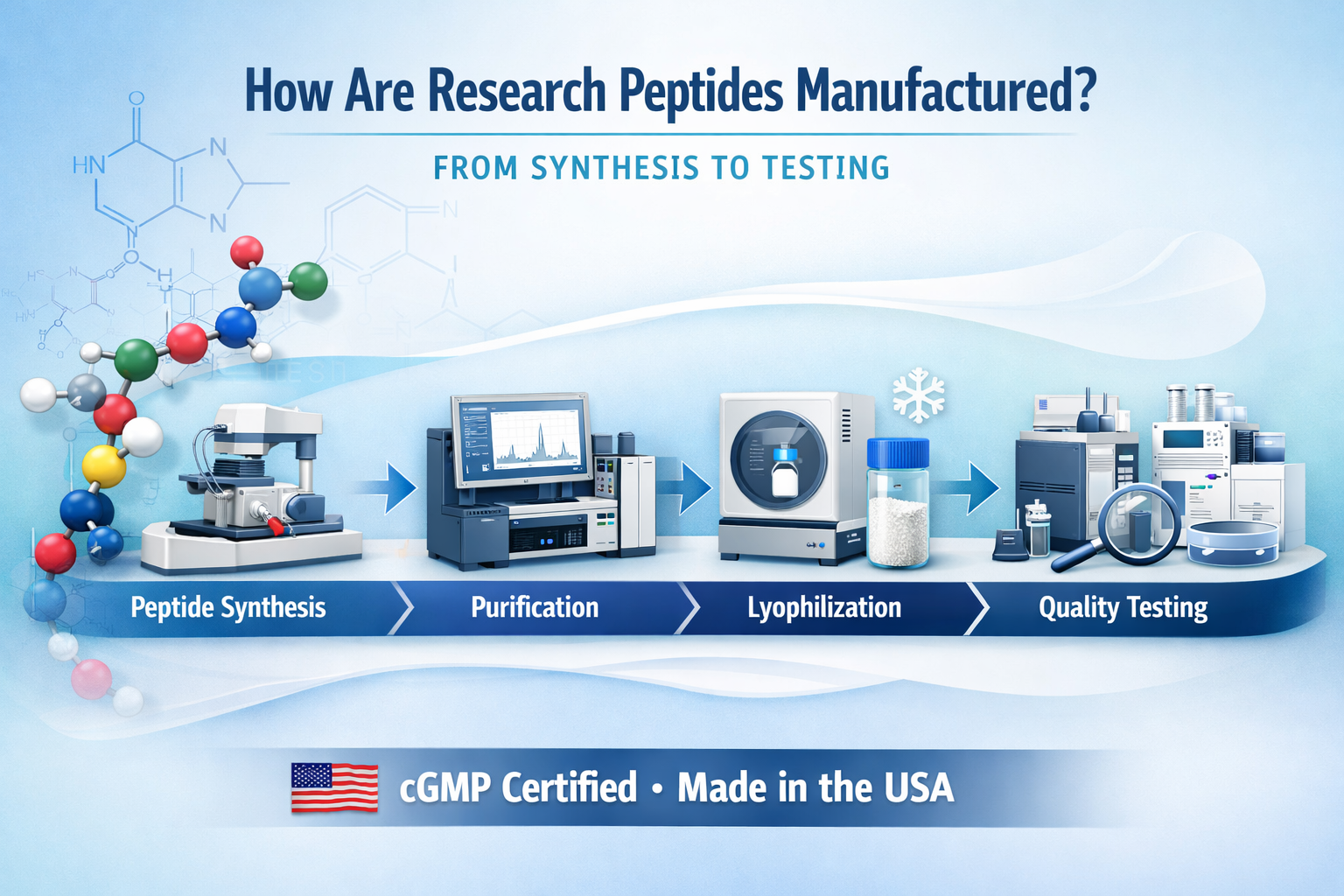
New Innovation Offers Quickly Peptide Synthesis Massachusetts Institute Of Technology The country's considerable financial investment in biotechnology and a deeply incorporated life Sermorelin sciences ecosystem more increases advancement in this country. Reverse-phase chromatography (RPC) is one of the most functional and most widely made use of technique of peptide purification. With standard techniques of HPLC, the stationary phase records polar, hydrophilic particles that are then differentially eluted by boosting the focus of polar solvents in the mobile phase. In RPC, as the name indicates, hydrophobic particles from aqueous solutions are rather captured by the stationary stage utilizing hydrophobic C4, C8 or C18 n-alkyl hydrocarbon ligands, and their retention time is a feature of the hydrophobicity of the particle which of the mobile phase.
Advance Of Peptide-based Therapeutics In Infection
This growth is also being supported by a growing concentrate on domestic manufacturing, driven by worries over potential US tariffs on imported drugs, which is motivating financial investment in local peptide API production. This pattern is highlighted by current actions, such as Look at this website Cambrex's development of its peptide producing capabilities in the US. Switzerland is becoming a key market for peptide synthesis, mostly as a result of the presence of significant global pharmaceutical companies, leading contract producers, and academic research organizations.
Peptide Synthesis
Exactly how is BPC-157 peptide made?
BPC-157 might be prepared using solidphase peptide synthesis (SPPS). In SPPS, amino acids are added stepwise onto a resin service provider, with securing groups such as Boc or Fmoc and making use of combining reagents like DIC/HOBt and HATU to turn on the carboxyl group [18]
AAPPTec, LLC is an American peptide synthesis company found in Louisville, KY, that gives a complete line of peptide items varying from automated peptide synthesizers to peptide-related lab devices and high-grade reagents. AAPPTec peptide synthesis products aid chemists prepare and assess peptides in research for semi-preparative and preparative range. We supply all the technological information and guidelines for every action of peptide synthesis and purification. AAPPTec additionally uses custom-made peptides, for those that like not to manufacture their very own peptides, in amounts from mg to kg, in purities from crude to 98% pure, all at a budget-friendly price. The addition of protective systems fits well with the larger variety of techniques used in peptide manufacturing, highlighting the relevance of precision in amino acid combining. By strategically covering certain amino acid functions, researchers guarantee that following reactions breakthrough with precision, opening up the course for the managed development of the peptide bond-- an important milestone in the steady synthesis procedure. Additionally, the order of amino acids directs selections concerning deprotection in peptide synthesis, where protective devices are uniquely eliminated to expose responsive spots for continuous chain extending. Very carefully coordinating these stages adds to the accomplishment of creating peptides initially, emphasizing the significance of a well-thought-out peptide synthesis guide. Scilight Biotechnology-- Scilight Bioterchnology LLC was established in 2002 in Beijing, China.
This approach has been made use of for synthesis of proteins such as interleukin-3 and active enzymes consisting of ribonuclease A and all-l and all-d types of HIV-1 aspartyl protease.
Peptides offered as acetate salt are a lot more conscious Cysteine oxidation than the corresponding TFA salt or HCL salt.
Selective deprotection is best achieved by using orthogonal side-chain defense, such as allyloxycarbonyl or 1-( 4,4-dimethyl-2,6- dioxocyclohex-1-ylidene) ethyl security for Lys and allyl or N- [1-( 4,4,-dimethyl-2,6- dioxocyclohexylidene) -3- methyl butyl] aminobenzyl security for Asp/Glu in mix with an Fmoc/tBu approach.
For more information on peptide alteration methods are explained in area "Enhancing peptide security and bioavailability with architectural modifications", where we have summarized them in more detail.
Typically, the reconstitution procedure involves attracting a procedure of bacteriostatic water right into a syringe and then presenting that water to the peptide powder. Your prescriber's directions need to define how much water to make use of and how to dissolve the powder. Nevertheless much water you're expected to use, avoid drinking the remedy, as it can break down the peptide. Likely, your peptide prescription will certainly also feature everything you require to do simply that-- bacteriostatic water and needle syringes. Genome editing is a type of genetic engineering in which DNA is inserted, deleted, modified or changed in the genome of a living microorganism. Unlike very early genetic engineering strategies that arbitrarily inserted genetic material into a host genome at an undefined site, genome modifying targets the designated modification to particular genetic locations of passion. Synthesis of your customized peptide is accomplished by specialists peptide chemistry, using most ideal approaches a combination of solution synthesis or/or strong phase synthesis, Boc/Bzl or Fmoc/Boc approach, making use of highest quality basic materials available, including amino acid derivatives and reagents. In the very early 1960s, Merrifield recommended using a polystyrene-based strong support for peptide synthesis. Peptides could be assembled step-by-step from the C to N terminus making use of Nα-protected amino acids. SPPS of a tetrapeptide was attained by utilizing Cbz as an α-amino-protecting team, coupling with N, N'- dicyclohexylcarbodiimide (DCC), and liberating the peptide from the support by saponification or by utilize of HBr (Merrifield, 1963). SPPS was later modified to use the t-butyloxycarbonyl (Boc) team for Nαprotection (Merrifield, 1967) and hydrogen fluoride (HF) as the reagent for removal of the peptide from the material (Sakakibara et al., 1967). SPPS was therefore based on "loved one acidolysis," where the Nα-protecting team (Boc) was labile in the existence of modest acid (trifluoroacetic acid; TFA), while side-chain-protecting benzyl (Bzl)- based teams and the peptide/resin link were stable in the presence of moderate acid and labile in the existence of strong acid (HF). All residual products, such as peptides not satisfying the customer's purity standards are discarded. The complimentary Nα-amino team of a secured dipeptide is positioned for a base-catalyzed intramolecular assault of the C-terminal carbonyl. Base deprotection of the Fmoc team can therefore launch a cyclic diketopiperazine while a hydroxymethyl-handle leaving team remains on the material. Two glucagon associated peptides were ultimately recognized in rat, bovine, hamster and human glucagonogen. These two peptides are currently described as GLP-1 and glucagon-like peptide-2 (GLP-2). GLP-2 is an enterotrophic hormonal agent released by enteroendocrine cell (EEC) L cells,263 and its receptor is mainly distributed in the digestion tract, putting in enteroprotective effects via various paths GLP-2 really protects against endotoxin-related raised intestinal paracellular leaks in the structure in rats. Along with its capability to reduce gastric draining, prevent food intake, or control metabolic rate, the activation of the GLP-1 receptor causes a safety result, the policy of the hypothalamic-pituitary-adrenal axis, heart and lungs. It additionally decreases the manufacturing of inflammatory cytokines, chemokines, and the seepage of immune cells in tissues, leading to a broad range of neuroprotective and anti-inflammatory impacts. GLP-1 interacts with its receptors to promote insulin secretion from pancreatic β-cells and hinder glucagon release from pancreatic α-cells, raising satiety and postponing stomach draining in a glucose-dependent manner. When calculating the focus of peptide options for organic assays or other experiments, it is essential that the peptide material is accounted for. The actual peptide focus can be established by subtracting the non-peptide weight from the complete weight, which enables you to determine what volume of solvent to make use of. As an example, if you were making use of 1 mg of the end product to make a 1-mg/ml peptide service with a content of 80%, you would certainly use 800-μl of solvent instead of 1000 μl. The solubility of a peptide in water can not be anticipated by examining its structure.